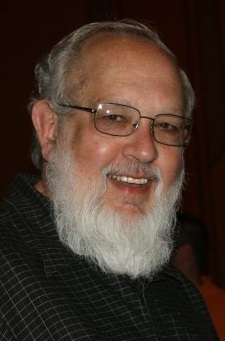
My dad was an evangelist of sorts.
Not a man clothed in robes or a collar.
Not a man who spoke in front of a congregation.
Not a man who folded his hands with a bowed head.
He ran his own kind of church. Not the kind of church where ladies cooled themselves with paper fans and wiped sweat with Granny’s hanky. But his own dynamic, revolving door-on-the-street-corner-kind of church.
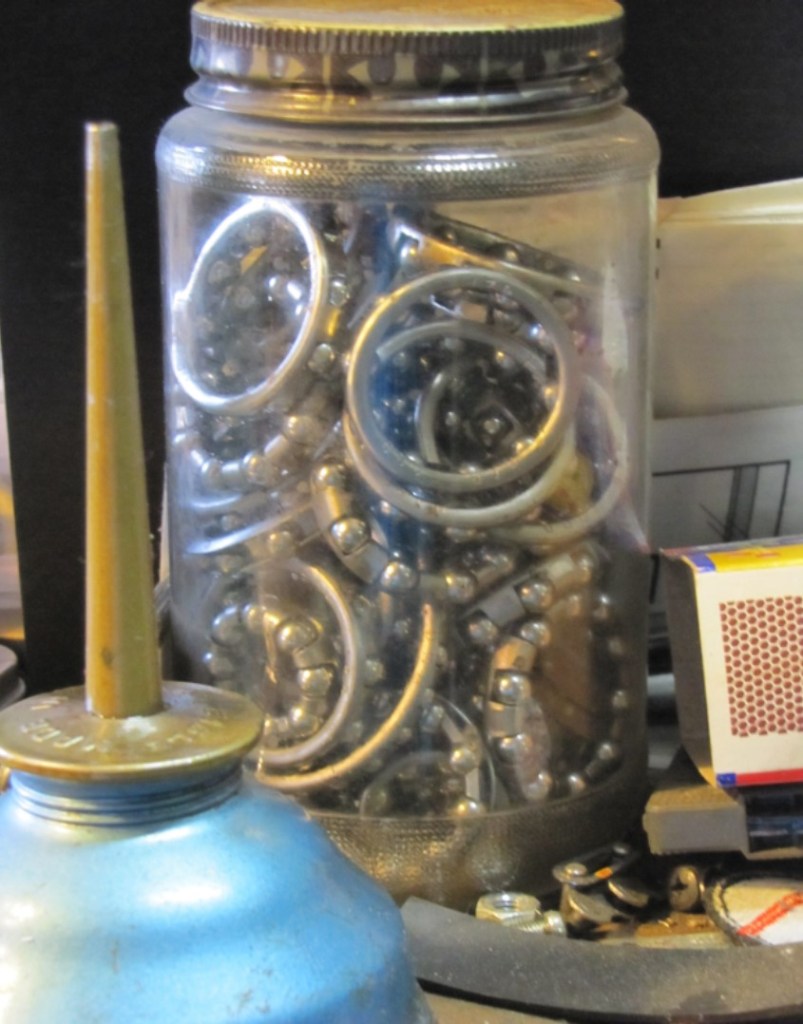
Dad’s bicycle shop was three stories of brick heated by the summer sun. When I sat on the only stool in the repair shop, I could look through the window of the back door and see the heat radiating off of the side of the building. In the winter, it was bitterly cold, and the wood stove heated only the repair shop and a small part of the front of the store. I spent my days sorting through wrenches and parts on the workbench and unfolding the invoices for the week. I waited on the public, sold what I could without Dad’s help, deposited checks in the bank, replaced damaged tubes with new ones, cleaned and filed, and stocked the store. I organized retail catalogs, tagged broken speedometers, labeled pedals and derailleurs with price tags, and spent minutes every day looking for a working ink pen. I broke down bike boxes, hung wheels on hooks, fetched rims from the basement, and counted change back to customers from a broken cash register. I knew the UPS man by name, forged my dad’s signature with his permission, washed windows, collected aluminum cans for coins, and answered the phone: “Wheel and Spoke”
This is where I was raised.
Dad, whose glasses were always positioned down his nose when he trued wheels, never moved when George would enter the side door a few times a year. He’d walk down the indoor ramp, overlook me, and almost always say, “Mmmm, byke boke. Mmmm, byke boke.” Dad turned around, spoke wrench in hand, greeted him in plain English, and asked him what was broken on his bike. George would spit out a series of sounds resembling nothing familiar to me, and Dad would tell him to wait on the sidewalk with his bike. Dad would grab the appropriate tools, fix what was broken, and send him on his way. He never talked poorly about George and didn’t even brag about his own ability to discern George’s needs. I have no idea if Dad met George before he had a bike or maybe before I was born, but they had a clear understanding of each other. I knew there was probably more to the story. Bicycle cranks and unusual wheels hung on J-hooks from the lowered ceiling in the back of the repair shop. Dangling from a string above my head was a key copied from a hardware store. The repair tag tied to the key, blowing in the wind of the box fan, was labeled in Dad’s scrawl: George.
Any day of the week or every day of the week or once every couple of weeks, it was normal for Big John to show up. He was a tall, large-bodied man maybe in his late 50’s who always parked his Cadillac of a bike within sight. He spent hundreds of social security dollars not only buying it but accessorizing it. Even if I didn’t see him coming, I could hear him—heavy, steady, clicking footsteps of polished shoes styled from the days of the sock hop. And if I didn’t hear him, I could easily smell him, freshly showered with glossy Dippity-Do on his hair and an ample dose of English Leather on his skin. His bike was the most expensive possession he owned, and he visited the shop not to check out the latest bicycle bell or basket but to be heard by someone who would listen. I often busied myself unpacking a box or folding some clothing to avoid being locked into a listening session with Big John. He was nice, sometimes sweet, but talkative about nothing interesting to me, and… his eyelids fluttered. “I rode down the river this morning. That sun sure was hot, Brother. You know I sweated all the way,” he said. “Paul’s Market had peaches, but I don’t think they’re any count; it’s just too early yet.”
Conversations as mundane as these were all he needed. Dad rarely lifted his eyes to him during his monologue, but acknowledged him with a few grunts and uh-huh’s. Big John would tell how many boxes of Jell-O he bought yesterday and for how much. He told of his fifth grade education and how it was just pitelthetic (his version of pathetic) and that his PCR (his version of VCR) was on the fritz. Dad gave him garden-grown tomatoes or a slice of cantaloupe in the summer and a seat near the woodstove in the winter. On occasion, when we’d all be busy with customers, Big John would answer the phone. He couldn’t tell much more than when the shop was closing, but he’d let the person on the line know to hold on until we could get there.
This was the community in which I was raised.
Characters like George and Big John were staples in our bike shop family. Regular customers, friends, and family all knew them. My dad was known for offering simple kindness to people who were often ignored by others. One evening Dad delivered George’s repaired bike to his trailer by the river, along with a bag of groceries. And when Big John was so sick that he was moved to a nursing home, our family gathered around his bedside to listen to him talk about the price of beans and the construction on the river road.
It didn’t matter why George couldn’t speak plainly.
It didn’t matter why Big John had no family.
It didn’t matter why Neal had used drugs as a kid.
It didn’t matter why Mike drove a convertible but never had a nickel.
These so-called misfits carried a knapsack of challenges including illiteracy and loneliness and an absent self-esteem. But Dad showed us how to treat people who’d been to jail or lacked parents or suffered from a mental condition. My dad’s ministry was quiet and driven by a call to share reality and ease the sharpness of life. We didn’t go to church, and I didn’t own a Bible. But I learned about the importance of human equality and dignity.
 REVEALING PANES
Powerful.
LikeLike
Just beautiful. I know that man… through his daughter. Just beautiful.
David
LikeLiked by 1 person
Oh my, I knew George and John, George would say something that only Larry could hear and he’d tell me, “Herb, go downstairs and grab a (certain sized) tire and tube for George’s bike.” Big John was a character–whose story you told beautifully. Your dad was a pivotal character in my life–an adult who gave me guidance in life w/o saying a word–when everyone but my mother had thrown up their hands in dismay about what I was or wasn’t doing with my life. There was a cherubic black girl–her name escapes me, I could do NOTHING for her until, by chance, I stopped into the bike shop and she was working for Larry. After Larry got through chiding me for “being a stranger too long,” he introduced me to her “as a kindred spirit.” That girl was good as gold with me so much as her other teachers would ask me how I got along so well with her. She was Larry’s cherub.
I do not think there is ever a day, and definitely a week that goes by where I do not think about Larry Arnold–especially when I hear “Foggy Mountain Breakdown,” or “Life is like a Mountain Railway ” Larry introduced me to Bluegrass in the Bike Shop, as I called it. I sang along at first to make fun of it, then started loving it as much as Larry. I could regale you with stories about Larry, Glenn Button and me or of Vic Wood–whose life ended at the hands of a serial killer in Colorado Springs–Larry is like my animal spirit, and I loved the hell outta him. He introduced me to the olive dkinned “etnic gals” behind the counter at Blocks Bagels on our Wednesday excursions to Columbus Cycle. Oh the stories I have about him and me, the ones that get better every time that they are told. We need to have a beer or coffee and bring a tape recorder or notebook. I had so much fun becoming wiser with that wonderful friend.
LikeLiked by 1 person
What a life’s lesson to hand down to his daughter. I had the pleasure of meeting him many years ago .
LikeLike
The Lord made a duplicate. How rich the blessings we encounter.
LikeLiked by 1 person
Fantastic piece!
LikeLike