Imagine being forced to leave your country, causing separation from family and friends, with no activity in the real world for three years or 10 or 20. And then one day you’re thrown back into civilization where no one knows you. You have less than $100, no place to sleep, and a disconnection with everyday rituals. Unfortunately, this is the reality for some attempting to re-enter society after incarceration; it is also one of the most frustrating processes to witness.
On a hot September day, a young woman was released from prison after an almost six-year-sentence. Kenya shared bits and pieces of her former life with me, and I knew her family had abandoned her the minute she was taken to prison. She had decided to be released in a town where she knew no one, rather than return to her own because her family didn’t accept her. Since she knew no one in the city, she called me on the day she “popped out” into the world. Family of a friend from prison, who lived an hour outside of town, picked her up at the gate and considered her their new family member. They secured a phone for her, allowing Kenya to pocket the gate money she’d been given upon her release: $90. I received a text from her as she was enjoying her first restaurant meal and gathering some toiletries and clothing at Wal-Mart.
Through a series of arrangements while incarcerated, a pastor in the community had gifted her with a place to stay in a so-called re-entry house. It was late in the evening when she was settled and texted me again. I asked for the address and arrived shortly before 11 p.m. on a school night. I tentatively pulled up to the wrong curb, so our reunion happened in the middle of the street in an unfamiliar neighborhood. I’d never seen her in anything other than a bedraggled blue uniform, so my first sight of her in a white T-shirt and dark-colored gym shorts caught my attention. Kenya commented on my jean shorts and t-shirt too, since she had only ever seen me in professional dress clothes. The sense of freedom and surrealism was palpable in the hot night air under a dim street light. She was reeling from a long day of firsts with adrenaline scurrying in every word and move.
We sat on the porch of the house she would be sleeping in and chatted about the process of leaving and the process of meeting the two older women who already lived inside. They bragged about how the place was in better shape since they’d been cleaning and caring for it, but it was easy to see that it needed more work. The lock on the back door was rigged, the sink in the kitchen didn’t drain, and the basement dryer didn’t work. Eventually, our conversation turned to tomorrow.
Kenya was required to report first thing in the morning to her probation officer. I asked where it was and she rattled off an address from a piece of paper. She had no clue how to get there. She was unsure how to use her phone to find a map but said she was certain she’d figure it out by 8 a.m. I offered to pick her up and take her to the appointment, but she refused. She’d been promised a bike and assumed she would ride it there, but no bike had been left for her. She guessed that the pastor might arrive in the morning to take her. But it was only a guess: he’d left no note or word that he would do so.
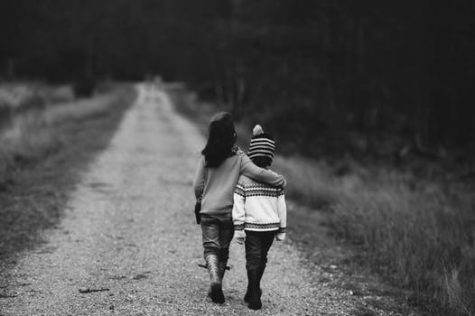
Conversation turned to the bed she’d be sleeping in tonight—a used mattress, not unlike the digs she’d just left. She didn’t care if she slept on the floor; she was grateful to be out of there and moving forward in this life. The house had no air conditioning, and she didn’t have a fan. But she was not bothered by that either. By midnight, my thoughts returned to how she would make it to the probation officer in the morning. Using my phone, we calculated how long it might take her to walk. I pictured the intense heat and her possible late arrival probably drenched in sweat. Not going at all or being late could certainly put her right back behind the bars she dreaded. So I pushed to show up in the morning to take her. She thanked me profusely and hugged me after years of not hugging or being hugged by anyone.
In the morning, I arrived to find a neatly dressed woman with her head held high and no sign of the pastor or a parishioner offering a ride. I drove to the office and wished her luck. I told her I’d wait, but if the appointment went long, I’d need to leave for a meeting of my own. I assured her I’d be back to get her, or she could begin walking the three miles toward the tall buildings down the street where I worked. Feeling like I’d just left my child in the hands of a stranger, my mind was not on work. After the meeting, I hurried to my car and returned to the road leading to the lot where I’d left her. About halfway there, I spied her standing in the shadow of a small tree in a full sweat in her new dress clothes. Kenya smiled and hollered something like, “It’s about damn time!” and jumped in the front seat.
She had reported to the authorities and felt good about it. She had no friends for miles, no family to shelter her, and no possibility of a job. But those were not her concerns for the first week out. During the next few days, the two older women in the house would serve as decent guides for riding the bus and possible job leads but within a few weeks, they would leave the house. Alone in a big unfurnished house in an unfamiliar city in a not-so-good part of town, Kenya navigated the unknown every day. Her spirit held all of the enthusiasm and hope needed to battle such a war as re-entry. But I had no idea just what a crusade she’d be up against.
 REVEALING PANES
Stay strong!
LikeLike